Thursday, May 10, 2012

Encore

Saw these and HAD to post them

Interested in a stuffed Bacillus anthracis spore?
Anthrax Plush Doll

http://www.giantmicrobes.com/us/products/anthrax.html click here to get yours!


ALSO I found this random video. It does not represent view of me, my teacher, nor Rockhurst University. It is short and sure to make you raise an eyebrow! The video isn't bad, just...quirky, I suppose.
Video

For real, bye and thanks for reading!

Wednesday, May 9, 2012

The Grand Finale

The semester has come to a close and it is now time to conclude this blog. Throughout my posts, I have discussed various concepts regarding the microorganism, Bacillus anthracis. I touched on general concepts about the bacteria and the disease it causes (Anthrax), while putting evolutionary twists on the topic. In my opinion, the most important idea the reader needs to take away from the blog are Darwin’s Postulates. In case you forgot:

1.       There is variation in populations

2.       Some of this variation is heritable (passed to offspring)

3.       More offspring are produced than can survive

4.       Natural selection (some offspring live and some offspring die based on heritable variation)

I think this is the most important concept because it can be applied to populations of any organism and is a contributing factor to evolution.

In addition, I also discussed the importance of the endospore stage in the lifecycle to better ensure survival. Bacteria that undergo spore formation quicker than others could have a better chance at survival because they would not be as exposed to certain elements.  Another post was about vaccines and the conflict about them. Some people want to give anthrax vaccines to everyone. This is not necessary, and as a result, the disease could mutate, causing variation to make future offspring more resilient. I also incorporated some articles into my posts and reviewed a class group’s project. Final lesson: if you think that white powder is anthrax, ask your mom for clarification!

It’s been fun writing for this! I love having people listen to me talk – even if it’s typing out my thoughts. Hope you enjoyed it as much as I did.

Kelsey

Tuesday, May 8, 2012

Insert Clever Title Here...

In my Evolution class, we are completing group projects revolving around the evolution of different diseases or viruses. One group chose to focus on anthrax. I decided, that for this blog post, I would review and discuss their blog. Hopefully, I am not too repetitive because I don't want to bore my teacher with information she has already read!

Rosetta@homeMisty, Joe, and Claire worked with and participated in grid computing for Rosetta@home. While THIS Rosetta does not teach you different languages, it has critical importance to the scientific world. This particular grid focuses on protein structure and folding within the diseases malaria, anthrax, HIV, Alzheimer’s, and even cancer. There is one specific protein in Bacillus anthracis called EF, which is short for oedema factor. This protein inhibits a different protein in the body which then "lowers the body's ability to fight off foreign invaders." Obviously, without this ability, the body is susceptible to infection.

The group of students also conducted an interview with an expert in the topic of anthrax. Specifically, they interviewed a professor in Biochemistry and Molecular Biology at the University of Kansas Medical Center, Mark Fisher, Ph.D. Different research projects and his studies of focus seem to be about protein folding. More information can be found here: Mark Fisher Ph.D's web page. In the interview, he first discussed his background information about himself and what events lead him to where he is today. He then discussed his work specifically with anthrax. Developments with the electron microscope have helped his research with ph levels and how they control the protein structure. In regards to evolution specifically, Dr. Fisher mentioned that commonly, when presented with medium that will inhibit growth, bacteria will mutate to survive (sounds familiar!). This causes different strains of the same virus. He wants to figure out, and have other scientists figure out, which regions of the DNA sequences are the ones that will mutate, given the opportunity. The group also asked Dr. Fisher what how he responded when talking with someone who does not believe in evolution. He told them that he explains his stance (pro-evolution) in ways that others can understand. One thing he said that really resonated with me was, "Every human being on Earth...[is] a walking history of evolution on this Earth. We are literally 3 billion years’ worth of information in books that are put on [sic] our genome." Based on the interview blog post alone, Dr. Fisher sounded like a wealth of knowledge and a great resource for the project the group did.

Each member of the group then posted about their feelings and reactions toward the interview. All were positive and showed that they seemed to really enjoy speaking with a professional.

The next post was an article that related to their topic. It is long, but really interesting! Read paper here

A couple things made me widen my eyes with surprise. I always think about anthrax infecting cows, sheep, and maybe a goat or two. This article though states that Bacillus anthracis can also infect...earthworms (specifically the red worm). Weird right? The bacteria spend part of its life cycle in the intestine of these worms. The other thing that really struck me was regarding bacteriophages. Theoretically, it makes sense that a bacteriophage can infect any given bacteria - hence the name bacteriophage. However, I never thought about bacteriophages much outside of my Microbiology flashcards. They actually infect Bacillus anthracis and insert its own DNA. Doing this, the bacteria goes through lysogeny. From this point, it can undergo sporulation. Other options though include making a home in an earthworm or starting a biofilm. It was interesting to learn about other variances between just the simple switch between a spore and a vegetative cell. This picture below shows a bacteriophage. Personally, I think they look like robots!
sahsrojas.pbworks.com


 Overall, I would say that Misty, Claire, and Joe did a wonderful job with their blog! I think they worked hard to maintain it through the semester and related concepts to classwork. It seems as though they each learned something that would not otherwise be taught in a semester introductory course. I encourage you to take a look at it! http://rosettacomputergrid.blogspot.com/

But seriously, I mean it. Read the blog and the article!!
Kelsey


The most recent assignment was to find an article pertaining to our topics and answer questions proposed by Dr. Walker. This was the paper the group chose to discuss. http://www.plosone.org/article/info%3Adoi%2F10.1371%2Fjournal.pone.0006532
It is a bit long

Friday, April 27, 2012

Vaccines


genome.fieldofscience.com


Vaccines are a controversial topic. Are they safe? Do they work? Do they actually cause disease? Setting these questions aside for a minute, I want to briefly discuss the anthrax vaccine. Yes, there is a vaccine! It is also made for both animals and humans. Personally, I don't hear about a lot of vaccines for bacteria - usually just viruses. There is only one vaccine that is licensed and approved called, BioThraxTM. Developed in 1970, it is made with attenuated B. anthracis and recommended for people 18-65 years old, who also happen to be at high risk of exposure to B. anthracis (fda.gov). It is suggested that the vaccine will protect against cutaneous and inhalation anthrax. Typically, one needs a series of 5 shots, plus annual boosters.
Check out the vaccine fact sheet from the CDC: http://www.cdc.gov/vaccines/pubs/vis/downloads/vis-anthrax.pdf

While trying to find some vaccine information, I stumbled upon this site, which actually seems more like a blog. http://genome.fieldofscience.com/2011/10/anthrax-vaccine-boondoggle.html Either way the writer, Steven Salzberg, is very opinionated about the anthrax vaccine. He acknowledges that vaccines are vital to today's world because they have eradicated diseases and saved lives. However, he insists that the anthrax vaccine is not a good idea. Polio and influenza, for example, are highly contagious and easily transmissible. Salzberg states clearly that anthrax is not infectious because it cannot spread from one person to another. I myself must admit that I have never heard of anthrax being spread person to person. Salzberg claims that making the vaccine is a complete waste of government money and scientist's time, especially because the Washington Post wrote an article about a clinical study where the vaccine would be tested in children. Rob Stein, the writer of the article states, "The National Biodefense Science Board (NBSB), which advises the federal government on issues related to bioterrorism, voted 12-1 to recommend that the Health and Human Services Department move forward with a study aimed at determining whether the vaccine is safe and effective in children and identifying the best dose." Personally, I will have to conduct a bit more research, as this sounds borderline unethical (experimenting to see if children will get anthrax if a dose isn't high enough). I see benefits of the vaccine for people at high risk such as farmers or people who work with hides and furs. I would not argue that a vaccine would be to military men and women's advantage. My hesitance lies in giving vaccines to people who are not at risk because it would be completely unnecessary. One of Darwin's four postulates says that there is variation in populations. There is also the topic of resistance that correlates with variation. One strain might be more resistant than another. B. anthracis could easily mutate and if several people receive a vaccine, the vaccine might not protect against the mutated organism. This new one would be selected for and the vaccine would be, quite frankly, worthless. At least, that's how I see it :/
A child recieving a vaccine. Hope she gets a sticker after!
nydailynews.com


The Washington Post article can be found here or linked in Salzberg's article.http://www.washingtonpost.com/national/health-science/federal-advisers-endorse-testing-anthrax-vaccine-in-children/2011/10/27/gIQA95i7PM_story.html

Other Sources:

Sunday, April 15, 2012

Storytime:

Athrax, the illness resulting from contact with Bacillus anthracis, has been an important disease throughout history. Throughout World War I and World War II, opposing sides would use anthrax as a biological weapon because of its capabilities to infect and survive as a spore. In WWI, German soldiers were sent to five countries, including the United States, to infect the animals with anthrax.  Throughout the 1930’s and 1940’s, different countries experimented with anthrax. During World War II, the Allies made biological weapons in the form of anthrax bombs. Following the war, scientist continued to research the potential of Bacillus anthracis and anthrax. President Richard Nixon decided that it was necessary that biological weapons only be researched for defensive purposes. However, many in other countries experimented with this potential weapon. In fact, the Soviet Union was suspected to have developed a strain that was resistant to antibiotics and a strain resistant to vaccines. Jumping to after the September 11 attacks on the US, anthrax spores were sent in the mail via four letters in the US Postal service. These spores took the form of a white powder. Five died and more suffered symptoms of anthrax.

U.S. Postal Service taking precautions
washingtonpost.com
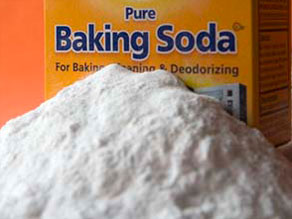
Now for a personal story! One of the reasons I chose this organism as a topic was because of this event. I was in the 5th grade in 2001 when these events were occurring. I heard about anthrax and how it was in the mail, but never quite understood the surrounding issues. I knew that anthrax was a white powder and was very dangerous. I went to a small Catholic grade school where students brought lunch every day. My mom carefully picked out healthy foods for me and packed them in my “cool” denim lunchbox.  One day at lunch when I opened my lunchbox I saw everything was neatly packed in ziplock bags, as per usual. I ate with a group of my friends and talked about whatever fifth graders find interesting. When I got to my tomato (whole), I saw a something odd: a white powder. Convinced it was anthrax, I put the tomato back in my lunchbox to bring home to show my mom what happened at school.  I knew my mom wouldn’t try to hurt me, but was confused as to where the alleged anthrax came from. I washed it off my hands and was nervous the rest of the day because I heard from the news what anthrax can cause. After school when my mom later asked the typical mom question, “How was school today?” I told her about my anthrax encounter. She gave me a conflicted look that was between wanting to laugh and feeling bad for me because I was scared. My mom then told me that as she was multitasking that morning, making breakfast and lunches for us kids, she spilled baking soda on the kitchen counter. Some ended up in my lunchbox. Relieved, I rinsed off my tomato and ate it for an after school snack.

Anthrax powder
extremumspiritum.com
Baking Soda
moneysavingmom.com

Easy mistake right?!?!? Maybe? For a fifth grader?
Kelsey


Saturday, March 24, 2012

Endospores

The bacteria, Bacillus, Clostridium, and Sporosarcina have a two-step life cycle; a vegetative cell, and an endospore. The vegetative cell is the phase of the life cycle where the bacteria are metabolically active. After a process called sporulation, the bacteria turn into metabolically dormant endospores. This spore is extremely resistant and capable of surviving harsh conditions including freezing, radiation, chemicals, and heat.  In a couple cases, there have been viable Bacillus endospores that are millions of years old. Testing shows that these spores are from a genetically different species of Bacillus than the species that are currently known (Talaro 105). This suggests that the species evolved or branched at some point in time. These ancient spores never came into contact with a host to infect and have since stayed spores.


Spores under an EM microscope
http://molmedicaltidbits.wordpress.com/2011/05/03/anthrax-as-biological-weapon/

Sporulation is a very complex process, as many genes (up to one-third of its total genes) are involved in the spore production. It takes only five hours to become a spore because the vegetative cells need protection, so sporulation must occur quickly. Each anthrax spore has approximately 750 in proteins in it.
The whole process of sporulation can be an evolutionary advantage. The bacteria that change into a spore the quickest will not die from environmental factors that normally will kill bacteria. Selection favors the bacteria that morphed into spores quickly. Also, the composition of spores must be fairly complex to provide such protection for the bacteria. Spores have a core adn cortex surrounded by a spore coat and an exosporium. This spore structure also could be credited to evolution by selection. The spores with better protection would have survived as opposed to any with minimal or insufficient protection from the environment. Spores are very necessary for the survival of Bacillus anthracis.

Structure of a spore
https://www.llnl.gov/str/June02/Balhorn.html


Yay!

http://www.medicalnewstoday.com/releases/4906.php
Chess, Barry. "4." Foundations in Microbiology. By Kathleen P. Talaro. 8th ed. New York: McGraw Hill, 2008. 105. Print.

Monday, March 5, 2012

Darwin and Natual Selection


Charles Darwin is a well known contributor to the theory of evolution. Many know that he went to the Galapagos islands and noticed variation in the animals there. People also know that he came back and wrote the famous book, On the Origin of Species by Means of Natural Selection. What people do not know commonly are the gaps that fill those events.

The dapper, Charles Darwin
http://pterosauria.files.wordpress.com/2011/02/charles-darwin.jpg


Darwin set sail on a ship called "the Beagle" which was on a trip to around the South American coast. Darwin was on the ship to find evidence to support natural theology. With all the fossil evidence, variation of species, and other observations, Darwin had a lot to contemplate! Once he returned back to England, he thought about and researched information about his hunches, until he came up with the theory of evolution as "descent with modification." This means that every organism is related and has descended from an ancient common ancestor. The main concept of descent with modification is the theory of natural selection. The Theory of Natural Selection has four parts, or postulates, that encompass the idea:
1.       There is variation among individuals of a species.
2.       Some of these variations are heritable.
3.       In every generation, more offspring are produced than are able to survive.
4.       Some of these offspring live and some do not survive. (Natural Selection occurs)
Here, an article describes a “real life” example of natural selection. “The theory of natural selection clearly explains how features such as the sharp teeth of the tiger, the thick fur of the polar bear and the camouflage of the moth evolved. When the ancestors of polar bears colonised the Arctic, for instance, those with thicker fur would have had a better chance of surviving and producing more offspring than those with thinner fur” (Wilson). The Arctic is obviously cold and polar bears that live there would benefit from thicker fur. Variation in the polar bear population would include bears having thinner fur and thicker fur. This trait would be a heritable one that would be passed on to offspring. More baby bears are produced than can survive, but the ones with thicker fur have a better chance of survival and reproduction.
The same principles can be applied to the microorganism, Bacillus anthracis. Anthrax can be treated with three different drugs: ciprofloxacin, doxycycline and penicillin. Bacillus anthracis has variation in each population. Some of these variable traits are hereditary and then passed on to offspring. Usually variation can be seen in the strains of Bacillus and whether or not the strain is resistant to the antibiotic. More Bacillus are produced than can survive. The antibiotic of choice will kill some of the organisms, but not others. The ones that survive are more resilient and have acquired an advantageous heritable trait.  Even though the theory was very controversial for a very long time, it is now well established in the field of evolution. 
Natural Selection in action!
http://www.answersingenesis.org/articles/nab/is-natural-selection-evolution
A comical view of natural selection!
http://lostinreviews.com/2011/04/naturalselection/
Over and out!
Kelsey


Wilson, David Sloan. "Evolution Of Selfless Behaviour." New Scientist 211.2824 (2011): i-viii. Academic Search Complete. Web. 5 Mar. 2012.
 Evolution Note Sets by Mindy Walker